1. Why Is Floor Protection Necessary When Installing Machinery?
In industrial factories, moving and installing machinery lines weighing several tons is always a major challenge. Factory floors are often coated with Epoxy paint or polished concrete, which are highly vulnerable to scratching, cracking, or structural damage under the pressure of crane wheels, forklifts, or machine feet.
Using film faced plywood as a floor protection and dunnage layer is currently the most economical and effective solution, serving as a practical alternative to expensive and heavy steel plates.
2. Criteria for Selecting High Load-Bearing Floor Protection Plywood
Not all plywood is suitable for machinery support. Plywood used for machinery floor lining must withstand extremely high point loads and localized compression forces without structural failure.
- Thickness: Minimum 18mm; ideally double-layered sheets (36mm) or specialized plywood with thickness ranging from 21mm to 25mm.
- Core material: Must be hardwood core (Eucalyptus, mature Acacia) or Birch core. Softwood cores such as Poplar must be strictly avoided, as they will compress and deform immediately under machinery weight.
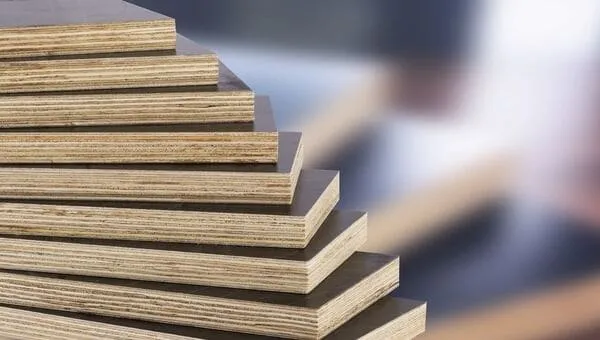
- Core pressing density: High-pressure hydraulic pressing is mandatory. When cut, the core must be dense and solid with no internal voids. If the core contains gaps, machine feet can punch through the plywood surface, leading to instability or equipment tipping.
3. Cost Comparison: Film Faced Plywood vs Steel Plates
This is the primary reason why professional machine installation contractors increasingly choose plywood solutions:
| Criteria | Heavy-Duty Film Faced Plywood | Steel Floor Protection Plates |
|---|---|---|
| Cost | Low cost (approximately 1/5 the price of steel) | Very expensive |
| Weight | Lightweight, easy to move and install manually | Very heavy, requires crane or forklift support |
| Floor Protection Performance | Good protection (wood has natural elasticity and shock absorption) | Poorer protection (very rigid; may damage Epoxy or concrete floors if edges are sharp) |
| Flexibility | Easy to cut and customize to match machine foot shapes | Difficult to process or modify on-site |
4. Safe Installation Techniques for Floor Protection
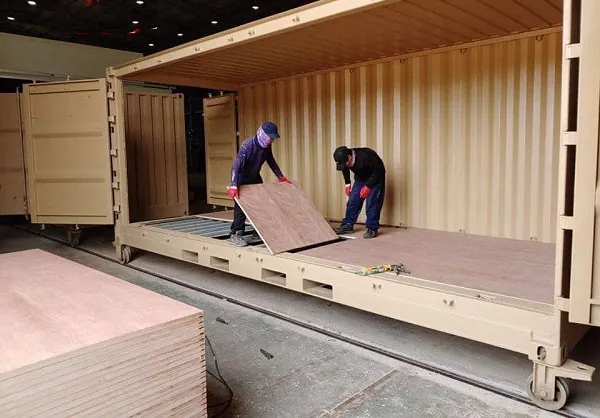
Practical experience shows that to maximize protection for Epoxy floors, an additional layer of woven plastic tarp or thin foam sheet should be placed underneath the film faced plywood. This helps minimize friction between the plywood surface and the painted floor.
The plywood sheets should be securely connected using heavy-duty tape to prevent shifting when machinery or vehicles move across the surface. After the machinery installation project is completed, the plywood can still be reused for other construction projects or as temporary partitions, maximizing material lifecycle efficiency.