1. The Cost Challenge in Large-Scale Factory Projects
At industrial park projects such as Yên Phong (Bắc Ninh) or VSIP, the typical construction profile features extremely large concrete floor areas while floor-to-floor heights remain relatively low. The biggest cost pressure for contractors lies in slab formwork. Aluminum or plastic formwork systems require a very high initial investment, while traditional solid timber formwork results in poor concrete surface quality and requires significant labor for finishing after stripping.
In this context, film faced plywood emerges as the most practical solution to the problem, offering a well-balanced combination of clean surface finish, cost efficiency, and fast installation.
2. Real Cost Breakdown: Where Does the 32% Saving Come From?
A contractor operating in Yen Phong Industrial Zone conducted a direct cost comparison and recorded total savings of up to 32% after changing their formwork material strategy:
- Reduced consumable material costs: Instead of using low-grade plywood priced at 340,000 VND with only 3 reuse cycles, the contractor switched to mid–high-grade plywood priced at 440,000 VND with 10 reuse cycles. As a result, depreciation cost per square meter dropped from 113,000 VND/m² to just 44,000 VND/m².
- Lower auxiliary labor costs: The smooth surface of film faced plywood delivered cleaner concrete finishes, allowing the contractor to eliminate ceiling plastering and wall grinding crews entirely.
- Faster turnover speed: Large-format film faced plywood panels (1.22 m × 2.44 m) enabled installation speeds up to three times faster than small-piece timber formwork, significantly reducing scaffolding rental time and labor hours.
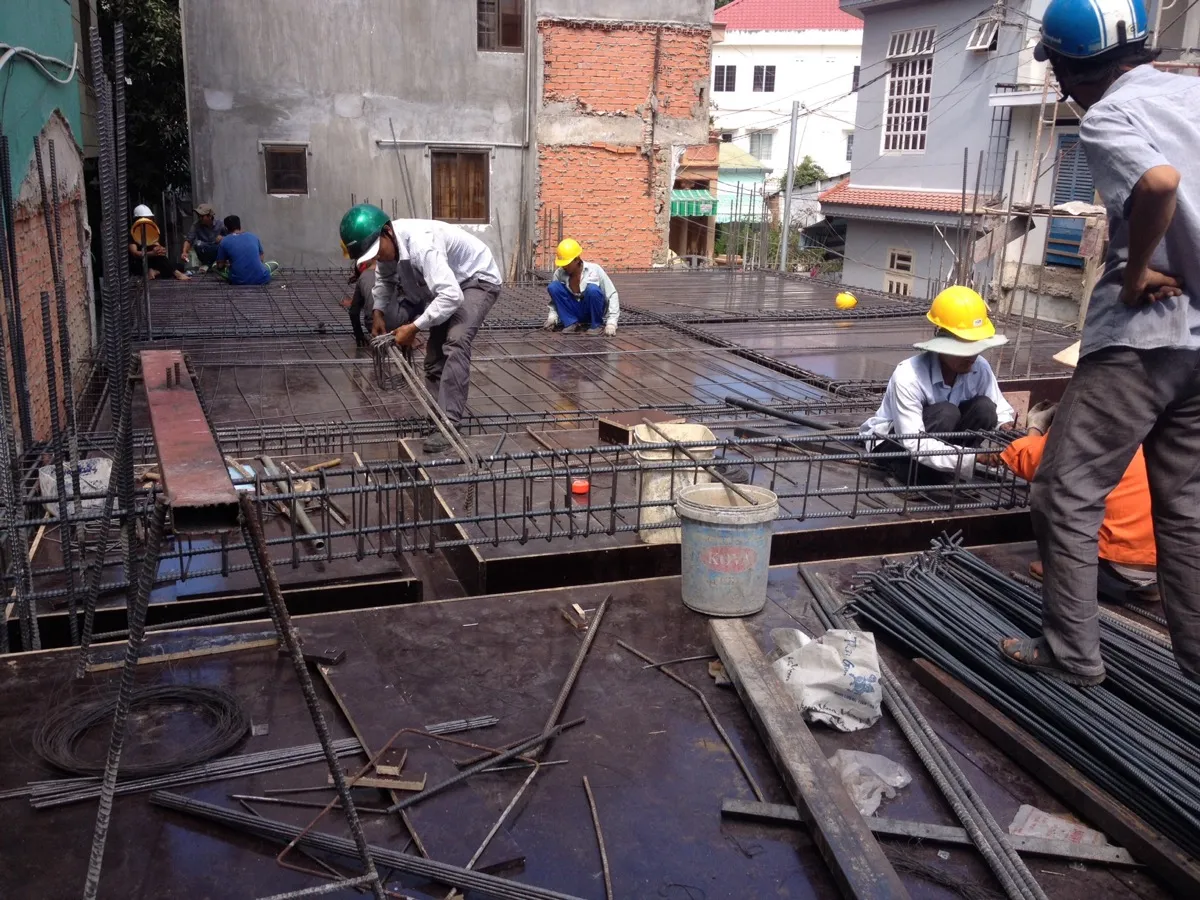
3. Management Practices That Maximized Efficiency
Buying high-quality plywood alone is not enough — how it is used ultimately determines real cost savings. At this project, the site manager implemented a strict control process:
- Cutting layout planning: Plywood cutting layouts (cutting lists) were calculated in advance using software to maximize sheet utilization, reducing waste to below 5%.
- Cleaning after each concrete pour: Workers were required to remove all concrete residue and apply form release oil before the next installation. This practice prevented film peeling during stripping and significantly extended the service life of the plywood.
4. Key Takeaways for Small and Medium-Sized Contractors
Rather than focusing solely on initial purchase price, contractors should evaluate “cost per square meter per use.”
Investing in higher-quality film faced plywood—combined with disciplined maintenance and handling—is one of the simplest and most effective ways to increase net project margins, especially amid the intensifying bid price competition expected in 2026.