1. Investment Capital Shifts in 2026
The year 2026 marks a strong recovery of FDI inflows into industrial real estate and manufacturing facilities. Large-scale factories from South Korea, Japan, and Taiwan continue to expand across Bac Ninh, Bac Giang, and Hai Phong, all of which demand fast-track construction schedules.
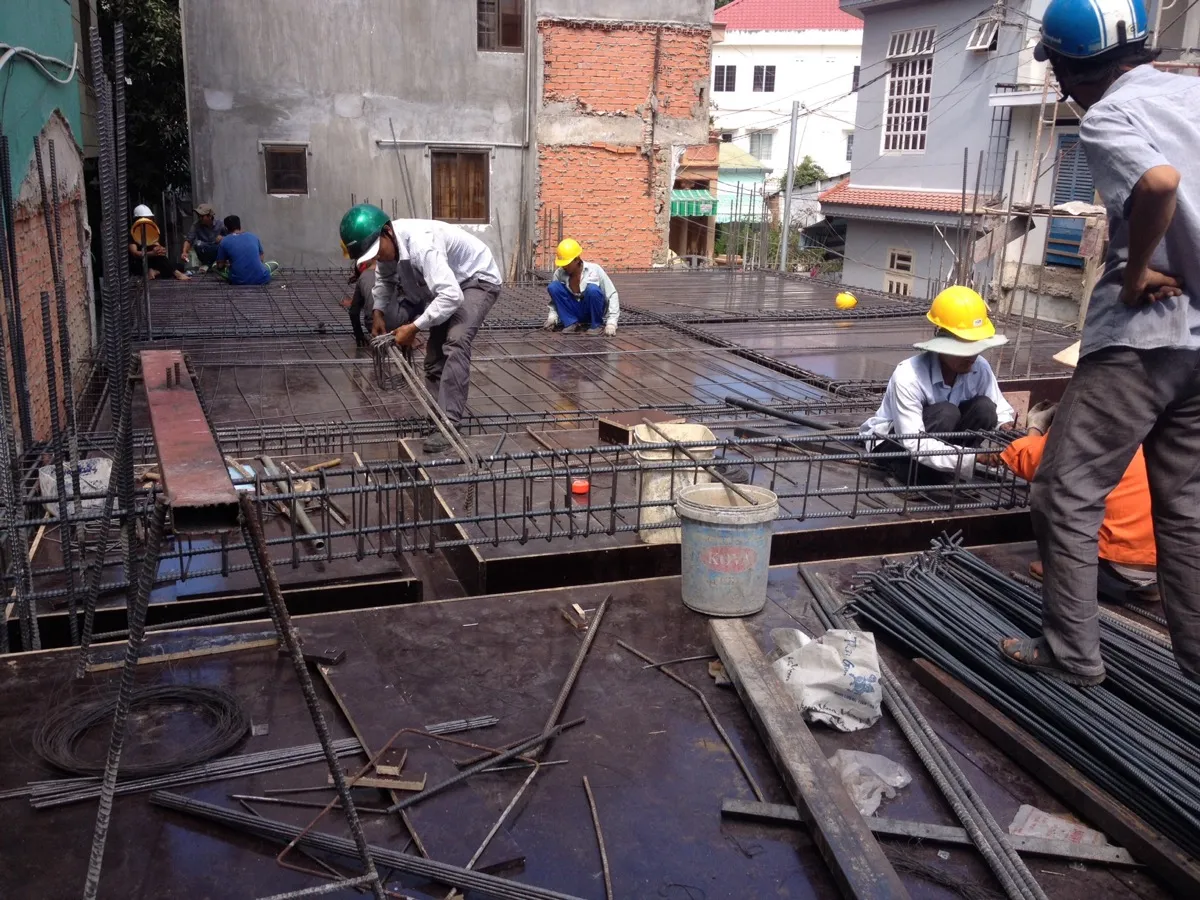
This trend is driving massive demand for film faced plywood, a core material for accelerating concrete slab and column casting. The discussion is no longer about whether to use film faced plywood, but rather which grade enables the fastest reuse cycles and construction turnover.
2. The Shift Toward Larger Panels and Higher Quality Plywood
While small contractors previously prioritized low-cost plywood to reduce upfront expenses, the 2026 trend is clearly shifting toward cash-flow efficiency.
The economic calculation is straightforward: Purchasing plywood at 450,000 VND with 10 reuse cycles (45,000 VND per use) is significantly more cost-effective than buying plywood at 350,000 VND that lasts only 4 reuse cycles (87,500 VND per use).
Surface quality requirements are also rising sharply. Foreign investors increasingly demand fair-faced concrete finishes, where surfaces must be smooth immediately after formwork removal, eliminating the need for plastering. This pushes contractors toward high-grade film faced plywood, using Dynea film or imported Korean film, to meet strict inspection and acceptance standards.

3. Forecast of High-Demand Regions
Based on the 2026 construction planning map, plywood consumption is expected to concentrate around three major growth zones:
- Northeast Vietnam (Hai Phong, Quang Ninh): High demand for salt-resistant and moisture-resistant plywood for coastal projects and logistics ports.
- Hanoi Satellite Areas (Hung Yen, Ha Nam): Strong demand for mid-range plywood serving satellite urban developments and social housing projects.
- On-site Export Market: International contractors bring their own specifications into Vietnam, such as E0 emission standards and CARB P2 compliance, creating a high-end niche market with strict supplier qualification requirements.
4. Supply Challenges for Large-Scale Projects
Despite rising demand, domestic plywood manufacturers face increasing constraints in plantation timber supply. By Q3 2026, localized shortages may occur, particularly for large-format panels or special thicknesses such as 21mm and 25mm.
Procurement teams are advised to place advance bookings at least 3–4 weeks ahead to ensure uninterrupted project schedules and avoid material-related delays.